

One of the greatest Christians, perhaps the greatest, is the Apostle Paul, who said, “I do not do the good I want to do, but the evil I do not want to do—this I keep on doing” (Romans 7:19).
Without the Holy Spirit, people cannot truly know God or have a relationship with Him. In John 14, Jesus tells the Apostles that after He returns to the Father, the Holy Spirit will be their constant companion, dwelling in and with them. Through God’s Spirit, believers begin to change, showing qualities like love, joy, peace, patience, kindness, goodness, faithfulness, gentleness, and self-control, in contrast to the sinful traits of sexual immorality, impurity, debauchery, idolatry, witchcraft, hatred, discord, jealousy, outbursts of anger, selfish ambition, divisions, envy, drunkenness, wild parties, and similar behaviors (Galatians 5:19-21).

The world often says that following your heart and living your truth will make you happy. You’re told you’re fine just as you are, and if not, you can read self-help books because you control your own life. But a follower of Christ knows this isn’t true, because real joy comes from examining the motives and desires in your heart and aligning them with God’s Word. Time and again, we see that when believers or non-believers live without God, they end up unhappy and wondering why. As Jeremiah puts it, the heart is deceitful above all things—who can understand it? True transformation comes through the lifelong process of sanctification, made possible only when a believer’s spirit works together with the Holy Spirit.
One of the loudest messages in today’s world is the idea that we can be good and powerful without God, a belief that plays right into Satan’s plan to deceive humanity and echoes back to the Garden of Eden. Jesus described the devil as a “deceiver,” “enemy” (Matt 13:39), “liar” (John 8:44), “murderer” (John 8:44), “evil one” (Matt 13:38), and “prince of this world” (John 12:31; 14:30). When Adam and Eve disobeyed God and brought sin into the world, humanity lost the grace that only the Father can restore. Theologian Thomas Aquinas noted that in the Garden, they possessed “original justice,” a perfect state taken from them the moment they ate from the tree of knowledge. Believing they could gain wisdom by eating the fruit, they instead lost the grace that had been theirs.

God’s Covenants
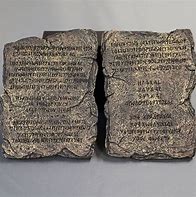
In Exodus, God gave the Law to the Israelites and told them to cleanse themselves from sin each year through animal sacrifice. This foreshadowed a future time when the Messiah would be the ultimate sacrifice, breaking the curse for all who believe. Jesus is called the New Covenant, which requires faith, as He is the only way back into harmony with the Father: “I am the way, the truth, and the life. No one comes to the Father except through Me” (John 14:6). The Old Testament speaks of God’s promises to Israel through the Abrahamic, Noahic, Mosaic, and Davidic covenants. The Mosaic Covenant brought the Ten Commandments to the Israelites on Mt. Sinai. The Law was never meant to save but to reveal humanity’s sin and need for a Savior. Animal sacrifices were commanded as part of cleansing from sin, pointing to the coming Messiah whose blood would cleanse the world’s sins once and for all.

Spiritual Disciplines
Jesus often withdrew into nature to pray to the Father, showing how believers can find meditation and solitude more meaningful when away from the noise and distractions of the world. Through quiet contemplation and self-evaluation, a believer can reflect on true motives and desires, allowing the Holy Spirit to shape their character and inspire them to live out spiritual disciplines. These disciplines include prayer, meditating on the Word, reading and studying Scripture, memorizing Scripture, fasting, and serving others, all of which draw a person closer to becoming more like Christ. Immersing oneself in Scripture, prayer, meditation, and reflection opens the heart and mind for the Spirit to work, leading to repentance, obedience, and self-awareness—not as acts of good works, but in faith. Prayer is woven into every spiritual discipline. In 1 Thessalonians 5, we are encouraged to pray without ceasing, and through this practice our character is shaped, our faith is strengthened, and our relationship with God grows deeper.

The closer believers draw to Jesus, the more they face attacks and temptations to disobey God. In Matthew 4:1-11, we see Jesus confronted by Satan’s attempts and teaching us to fight back with Scripture when Satan manipulates its meaning to deceive Him. Apostle Paul describes the inner struggle between a believer’s sinful nature and God’s holy nature, emphasizing the need for a transformed mind and heart, free from the “pattern of this world” (Romans 12:2). He also urges believers to put on “the full armor of God” to stand firm against the devil’s schemes (Ephesians 6:10). Prayer, for instance, is a key discipline in resisting the enemy. As Chapell notes, our desire to resist is often weak and we can want to rid ourselves of sin while still craving it. By “praying in the Spirit,” we ask Him to stir a greater zeal for God within us, enabling us to face and overcome the enemy’s attacks (Chapell).
Character Formation in Daily Life
A believer’s journey is filled with both struggles and blessings, moments of sadness and joy, as the human and spiritual natures often clash. Through faith and hope, character is shaped by consistently practicing spiritual disciplines, living out the call to “…go and make disciples of all nations…” (Matthew 28:19). As Christ’s ambassadors, the mission is to share the Gospel and make more disciples. This kind of spiritual growth means moving beyond simple understanding to truly experiencing life as someone whose heart longs for God’s Kingdom over the ways of the world.

Staying grounded in the Word through study and application becomes clear in my life when I approach it with proper context and understanding. Instead of living in isolation or hiding one’s faith, there’s freedom in living it openly, just as Matthew says, “Neither do people light a lamp and put it under a bowl; instead they put it on its stand, and it gives light to everyone in the house” (Matthew 5:15). Being unafraid and driven by a genuine desire to live out faith in a broken world leads to experiencing real joy.
References:
Chapell, B. (2011). Holiness by grace: Delighting in the joy that is our strength. Wheaton, IL: Crossway. ISBN-13: 978-1433524424
Strobel, K. (2013). Formed for the glory of God: Learning from the spiritual practices of Jonathan Edwards. Downers Grove, IL: IVP Books. ISBN-13: 978-0830856534
Vos, B. (2012). The Spiritual Disciplines and Christian Ministry. Evangelical Review of Theology, 36(2), 100–114. Retrieved from https://search-ebscohost-com.lopes.idm.oclc.org/login.aspx?direct=true&db=rlh&AN=75190759&site=eds-live&scope=site
 FAITH in JESUS CHRIST ALONE - Jesus Forum
Good job miss Hardy! I particularly like the portion about our sin. We sin because we want to, it’s a choice between good and bad right and wrong. There is no grey area. And given to ourselves , we would never seek God. There is nothing in and of ourselves that would cause us to do so. We don’t even know we are sinners so why should we. It is when our sinful wretched state is revealed to us and the Holy Spirit Of God begins working in us that we know realize our wretched state.
LikeLiked by 1 person
Hello to all
In this puzzling time, I love you all
Rise your one’s nearest and friends
LikeLiked by 1 person