
*******
Christianity differs from Catholicism, as the latter is based on both faith and works while Christianity holds to salvation through faith alone. The Roman Catholic Church presents a gospel that blends elements of paganism with aspects of Jesus’ teachings. Key points of concern include doctrines related to the Catholic Bible (Vulgate), praying the rosary, the roles of priests and popes, repentance, Virgin Mary, Eucharist, purgatory, and indulgences. Many believe this points to what Matthew 7:15-20 warns regarding to be wary of false prophets and false teachings.
*******
The Catholic Church emerged in the 3rd–4th centuries, breaking away from the Apostolic Church of the first century. The earliest church began in Jerusalem, led by Apostle Peter and James, the half-brother of Jesus. The second church, composed of gentiles and the first to call themselves Christians, was founded by Apostle Paul and Barnabas.
The Bible
Knowing God’s Word is the best way to spot false teachings. Those who have direct access to the Scriptures are less likely to fall for false teachers, the “wolves in sheep’s clothing” (Matthew 7:15-20). The Bible warns us that “…false Christs and false prophets will arise and perform great signs and wonders to deceive, if possible, even the elect” (Matthew 24:24). It is in 476AD that popes and bishops/archbishops were among the few who could read and write, gaining power, influence, and prominence over emperors until the Catholic Church became both church and state.
The Apostle John warns, “Dear friends, don’t believe every spirit. Instead, test them to see if they are from God, because many false prophets have gone out into the world. You can recognize the Spirit of God by this: every spirit that admits Jesus Christ came in the flesh is from God, but any spirit that doesn’t acknowledge Jesus is not from God. That is the spirit of the Antichrist, which you’ve heard is coming and is already in the world” (1 John 4:1-3).
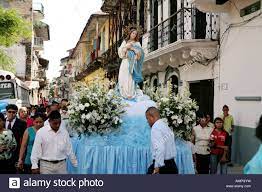
By the 1500s, Pope Pius IX declared that “The most Blessed Virgin Mary, in the first instant of her conception, by a singular grace and privilege granted by Almighty God,” was without sin, calling her the “repairer of the lost world,” sharing in glory Jesus, and even stating that “she crushed the head of the serpent.” In 1944, Pope Pius XII introduced the feasts dedicated to the ‘Immaculate Heart.’
The Vulgate and Those That Pointed Out False Interpretations of The Virgin Mary
The Vulgate is the Catholic version of the Bible. Before its creation, biblical manuscripts were widely known in Hebrew, Greek, and Aramaic. Jerome (347–420 AD) took it upon himself to translate the Scriptures from these common languages into Latin, a language no longer spoken. Despite opposition from his peers, he persisted and became associated with promoting the veneration of Mary as the “mother of God.” This sparked controversy, as some argued God could not have a mother. For instance, under orders from Pope Celestine and Pope Cyril, Archbishop Nestorius of Antioch and Constantinople (380–450 AD) was condemned and executed for rejecting such titles for Mary. She was given the title “Queen of Heaven”, a name previously used for idols of goddesses worshiped by ancient peoples in Jeremiah 44:7. Other titles included the Latin “mater Dei” and “genitrix Dei,” as well as the Greek Orthodox “theotokos,” all meaning “mother of God” or “blessed mother.” In the late Middle Ages, debates over this and other disputed teachings—like purgatory, indulgences, the mass, eucharist, idol worship, and the titles of priest, pope, and father—resurfaced, leading figures such as Desiderius Erasmus and Martin Luther in the 15th and 16th centuries to challenge the Roman Catholic Church, helping to ignite the Reformation.
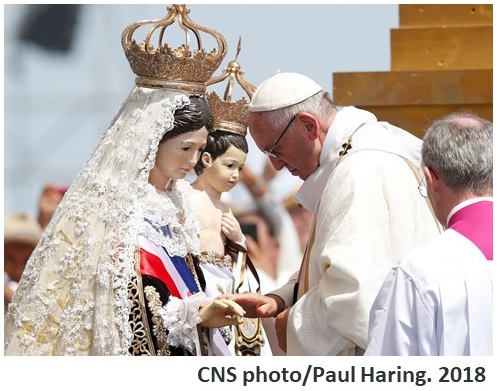
The Humanness of Mary
Also, the humanness of the Virgin Mary is clear throughout Scripture, recognizing her need for a Savior, declared, “My soul magnifies the Lord, and my spirit rejoices in God my Savior, for he has looked on the humble estate of his servant. From now on all generations will call me blessed; for he who is mighty has done great things for me, and holy is his name” (Luke 1:46-49). As Romans 3:23 says, “For there is no distinction: for all have sinned and fall short of the glory of God.”
Scripture clearly tells us Jesus had siblings, including James and Jude who wrote books in the New Testament. In Matthew, we get another glimpse into Jesus’ family: “Where did this man get this wisdom and these mighty works? Is not this the carpenter’s son? Is not his mother called Mary? And are not his brothers James, Joseph, Simon, and Judas? And are not all his sisters with us? Where then did this man get all these things? They took offense at him, but Jesus said, A prophet is not without honor except in his hometown and in his own household. Because of their unbelief, He did not do many mighty works there” (Matthew 13:54-58). There is also a moment in which Jesus addressed his mother at the wedding in Cana: “Woman, why do you involve me? My hour has not yet come” (John 2:4). Another time, when told his mother and brothers were outside wanting to speak to him, he responded, “Who is my mother, and who are my brothers?” Pointing to his disciples, he said, “Here are my mother and my brothers. For whoever does the will of my Father in heaven is my brother and sister and mother” (Matthew 12:47-50).
“Surely there is not a righteous man on earth who does good and never sins.” (Ecclesiastes 7:20)
*******
Original Grace
The Catholic Church holds a unique perspective on Mary, attributing to her a special grace known as Original Grace, similar to the grace possessed by Adam and Eve before the Fall. After Jesus’ resurrection, believers receive grace through the Holy Spirit, but this grace differs from Original Grace since we continue to grapple with our sinful human nature until we leave earth. Our restoration to the image of God will only be complete in Heaven. However, the Catholic Church exempts Mary from this, believing she is without sin. This Catholic interpretation comes from Luke 1:28, from Greek to Latin in the Vulgate translation, and is inconsistent with the whole of Scripture. In the original Greek, when the Angel Gabriel tells Mary she will conceive a son, the phrase is rendered as “greetings favored one,” “you are highly favored,” “greetings favored woman,” or “you are truly blessed.” Jerome, translating into Latin, took the Greek word *kecharitomene*, meaning “one who has been given favor,” and rendered it as “gratia plena,” or “hail one that is full of grace.” A more accurate Latin translation would have been simply “gratia,” referring to favor or grace, rather than “full of grace,” which implies sinlessness. Only Jesus is without sin: “…and the blood of Jesus his Son cleanses us from all sin. If we say we have no sin, we deceive ourselves, and the truth is not in us” (1 John 1:7-8).
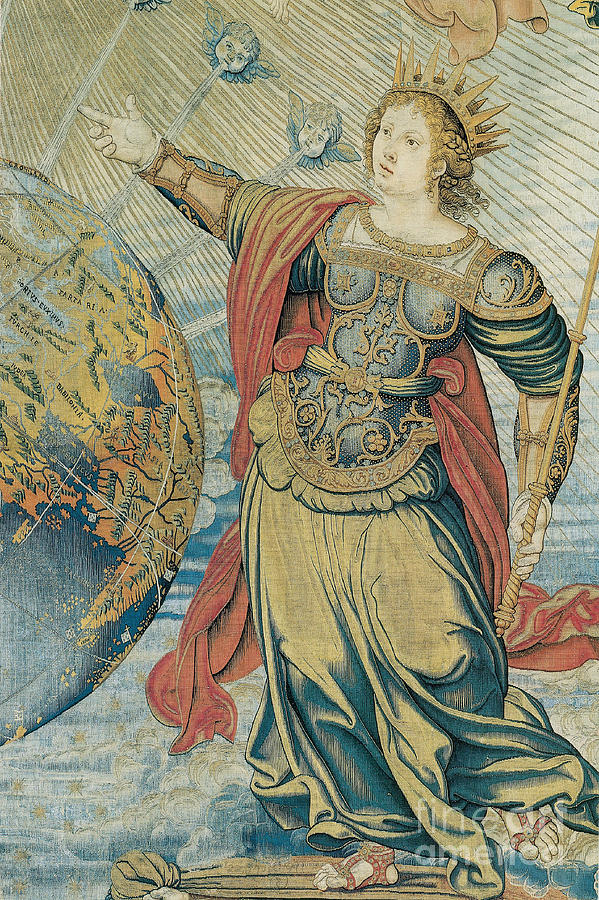
Mythical Pagan Goddess Worship
In ancient times, superstition was rampant. From the days of King Nimrod of Babylon and the Tower of Babel to the Canaanites, Egyptians, Greeks, and Romans, idol worship was prevalent. The Israelites frequently turned away from their one true God, Yahweh, to worship the false gods and goddesses of their neighbors. King Solomon, known for his wisdom and wealth was entrusted with building the First Temple under divine guidance, eventually allowed his foreign wives to lead him astray into idol worship. The prophet Jeremiah records about a time filled with idol worship and sacrifices: “The children gather wood, the fathers light the fire, and the women knead the dough and make cakes to offer to the Queen of Heaven [Ishtar]. They pour out drink offerings to other gods to arouse my anger” (Jeremiah 7:18); and “But ever since we stopped burning incense to the Queen of Heaven and pouring out drink offerings to her, we have had nothing and have been perishing by sword and famine” (Jeremiah 22:18).
In ancient times, goddess worship flourished across various cultures. Egypt revered Isis, Babylon honored Ishtar, Greece celebrated Aphrodite, and Rome worshiped Diana. The Catholic Church may not have specific types of rituals, but celebrations like parades and festivals with costumes and pageantry honoring the Lady of Fatima, Lady of Guadalupe, and Lady of Pontmain can be seen as forms of goddess worship that God rejects. Corruption from Satan can come from within the church, and popes and bishops are not much different from the Sadducees and Pharisees of the first century. Jesus told the religious leaders then, “You belong to your father, the devil, and you want to carry out your father’s desires. He was a murderer from the beginning, not holding to the truth, for there is no truth in him. When he lies, he speaks his native language, for he is a liar and the father of lies” (John 8:44).
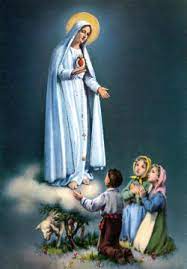
The Mary apparitions are often seen as an example of Satan presenting himself as an angel of light: “For such men are false apostles, deceitful workers, masquerading as apostles of Christ. And no wonder, for even Satan disguises himself as an angel of light. So it’s no surprise if his servants also disguise themselves as servants of righteousness…” (2 Corinthians 11:14-15).
Mary Apparition: Lucia, who experienced an apparition in Portugal, made requests for sick individuals. Mary responded that she would heal some but not others, and emphasized that everyone should pray the rosary to receive such blessings. She then added, “Sacrifice yourselves for sinners, and say often, especially when making a sacrifice: O Jesus, it is for love of You, for the conversion of sinners, and in reparation for the sins committed against the Immaculate Heart of Mary” (theotokos.org.uk).
The apparition’s phrase “to obtain such graces” echoes the Catholic concept of good works, but this idea isn’t supported by Scripture. Salvation is attained solely through faith in Jesus; our actions can’t earn God’s grace. Additionally, the statement about sins against the immaculate heart of Mary is incorrect, as sins are committed against God alone. These apparitions are demon driven and heretical placing Mary on the same level—or even above—Father, Jesus and the Holy Spirit; “…false prophets also arose among the people, just as there will be false teachers among you, who will secretly bring in destructive heresies, even denying the Master who bought them, bringing upon themselves swift destruction” (2 Peter 2:1). Church leaders have greater responsibilities and with it comes greater expectations, rewards, and punishments.
*******
More False Teachings of the Roman Catholic Church
Rosary
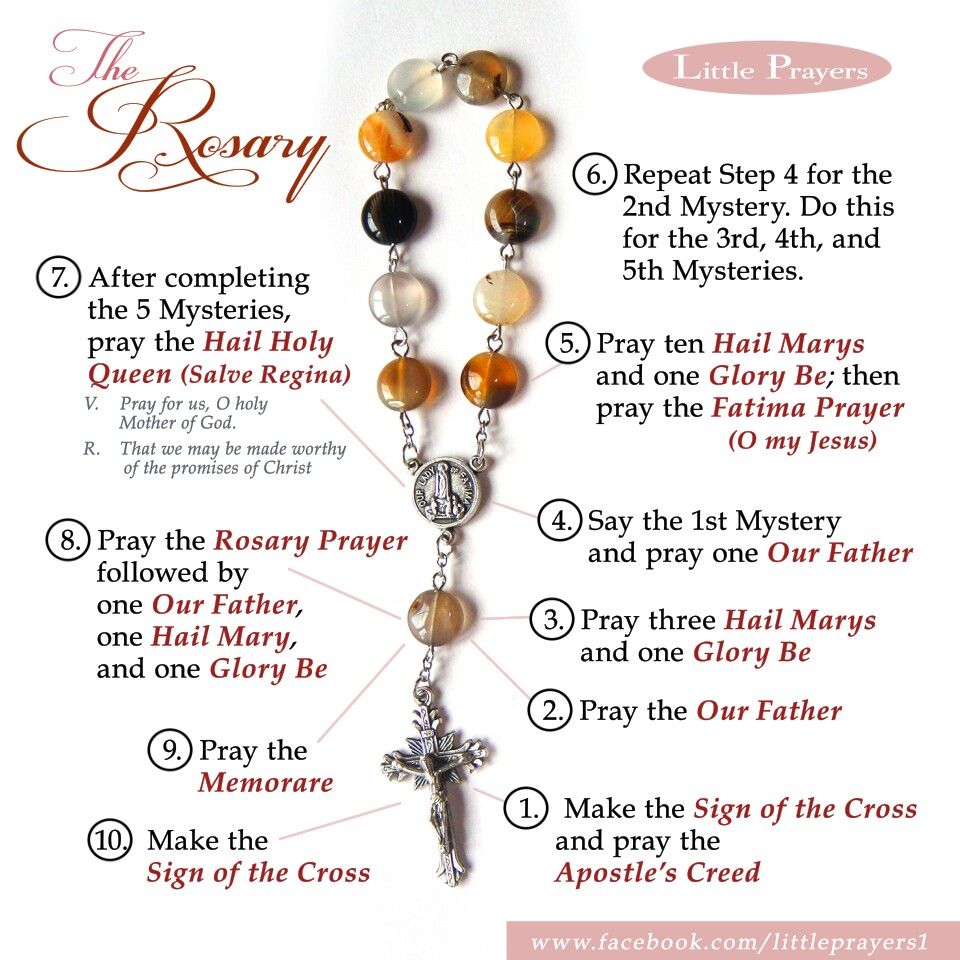
The rosary has many legendary tales, leading to the creation of another idol, the rosary beads, used for praying to Mary during the Middle Ages on the battlefield. Consider the method of prayer—does it mention Jesus Christ? Even if it did, it would still be an abomination. Then there’s the issue of repetitive chants, which are viewed as unbiblical and blasphemous, such as when a priest instructs someone to repent by saying ten Hail Marys. In the 1500s, Pope Pius V called for praying the Rosary during the Battle of Lepanto, which led to the title “Our Lady of the Rosary.” Scripture warns, “use not vain repetitions, as the heathen do: for they think they shall be heard for their much speaking” (Matthew 6:7). Jesus also says, “But when you pray, go into your room and shut the door and pray to your Father who is in secret…” (Matthew 6:6), not to seek out a priest or church leader to confess.
Celibacy
Celibacy is a tradition of the Catholic Church without direct biblical basis. The requirement for clergy to remain unmarried started in the 11th century during the reigns of Pope Benedict VIII and Pope Gregory VII. The main reason for this rule was to prevent the Church from having obligations toward the families of deceased clergy (MacArthur, 2015).
Purgatory and Indulgences
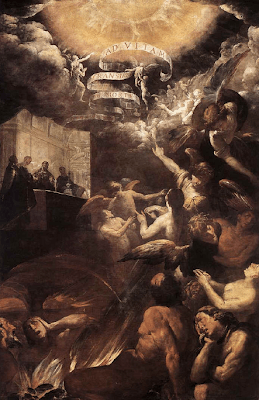
The Roman Catholic Church began teaching the idea of purgatory centuries before officially making it doctrine in the 12th century. If purgatory were real it would mean the sacrifice of Jesus Christ, our Lord and Savior, was in vain and did not truly save humanity from sin. To make matters worse, indulgences—created by the Church—gained popularity in the 11th century, when crusaders defended the Church from enemy attacks; for a price, people believed they could be cleansed of their sins. Centuries later, the Catholic Church would be responsible for those that were martyred for opposing the doctrines of purgatory and indulgences, including Desiderius Erasmus and the German monk Martin Luther.
Martin Luther claimed purgatory was “vainly invented.” It became increasingly clear that purgatory was a false teaching, as there is no pit stop or waiting room before judgment and entering heaven—it’s completely false. The Catholic Church created this idea that a person could somehow apply merit to loved ones to help them finish their journey to heaven. Believers can indeed pray for the salvation of others and share the Gospel—the Good News that God came to earth, lived, died, and rose from the dead so that those who believe in Him may have eternal life. This is the commission given to all who believe in Jesus, and it must be carried out while on earth.
How did the Catholic Church develop the doctrine of purgatory? Let’s start with Scripture that mentions Hades (Greek) and Sheol (Hebrew) as the “realm of the dead,” which is distinct from the final place of eternal torment called the “lake of fire” (Revelation 20, 21). In 1 Peter, we read that Jesus “went and proclaimed to the spirits in prison because they formerly did not obey, when God’s patience waited in the days of Noah, while the ark was being prepared, in which a few, that is, eight persons, were brought safely through water” (1 Peter 3:19-20). Paul writes in Ephesians, “What does ‘he ascended’ mean except that he also descended to the lower, earthly regions?” (Ephesians 4:9). Luke 16 recounts the parable of Lazarus and the rich man, where Jesus describes Hades/Sheol as divided into two sections separated by a chasm—one called Abraham’s bosom and the other a place of torment (not the lake of fire). Many theologians interpret these depictions as describing the place Jesus went during the three days between His death on Friday and His resurrection on Sunday. During this time, Jesus did not go to hell but to Abraham’s bosom, also called “Paradise.” He told the thief on the cross, “Truly I tell you, today you will be with me in Paradise” (Luke 23:43). As with 1 Peter, some interpret this to mean that after conquering death on the cross, Jesus appeared before fallen angels, the wicked, and unbelievers, while also freeing the Old Testament saints. The idea here is that those saved in the Old Testament had to wait until the resurrection before entering Heaven, as there was no way for them to do so beforehand.
An interesting point about Luke 14 is that the rich man asks for Lazarus to return to his family to warn them (v.27). Abraham replies, “They have Moses and the Prophets; let them listen to them.” At that time, the resurrection had not yet occurred, and the only reference was the Old Testament—the Torah, containing Moses and the Prophets. The rich man insists that if someone from the dead warned them, they would change, but Abraham responds, “If they do not listen to Moses and the Prophets, they will not be convinced even if someone rises from the dead.” This can be understood both literally and symbolically, emphasizing that once someone has died, there is no second chance. The New Testament teaches that believers go directly into the presence of Jesus after death, as in 2 Corinthians 5: “Yes, we are of good courage, and we would rather be away from the body and at home with the Lord.” In short, pray for loved ones while they are still living on earth.
Repentance and Eucharist
God knows our hearts better than we know them ourselves. The Holy Spirit moves the believer’s soul, making it hard to escape a contrite and remorseful heart. The only priest the believer repents to is our Lord Jesus, and through the power of the Holy Spirit they can turn away from sin. The Catholic Vulgate, however, uses the phrase “do penance” in Matthew 4:17: “Then Jesus began to preach and say: ‘Do penance, for the kingdom of heaven has drawn near,’” though the accurate translation is “repent, for the kingdom…” . Today, Catholicism still uses the terms ‘confession’ and ‘penance’, both of which involve acknowledging one’s sins. Penance, however, can also involve some form of self-punishment. In contrast, repentance involves approaching God with sincere sorrow and remorse, seeking forgiveness, and turning away from sin, as emphasized throughout Scripture.
Catholicism uses The Pope has been called “father,” despite Jesus’ words in Matthew 23:9: “And don’t address anyone here on earth as ‘Father,’ for only God in heaven is your Father.” Jesus is our only Priest for the repentance of sins. The role of priesthood began in the Levitical system, when God instructed the Jewish High Priest to make atonement once a year for the entire nation of Israel in the Holy of Holies (Leviticus 16; Hebrews 9), this is a foreshadow of what was to come through our Messiah. It is recorded in the Gospels how we gain direct access to Jesus as our one and only Priest the moment Temple veil is torn from top to bottom.
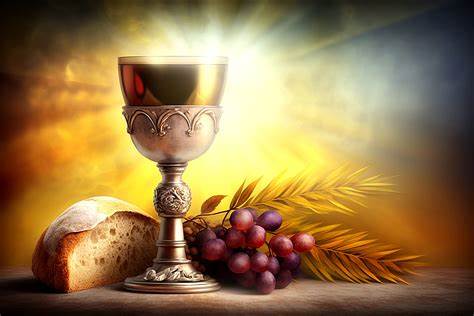
The Eucharist ceremony, known as the Mass, involves the belief in Transubstantiation. Unlike some Christian traditions that view it as a symbolic commemoration of the Last Supper, Catholics believe it is a true sacrifice, with the wine becoming the blood of Christ and the bread becoming His flesh. This is seen not as a repeated sacrifice, but as a participation in the one sacrifice of Jesus. Catechism #1367 explains that in the Mass, the same Christ who offered Himself once on the cross is present and offered in an unbloody manner. Catechism #1370 states that both the faithful on earth and the saints in heaven join in this offering, in communion with the Blessed Virgin Mary. Catechism #1368 adds that the Church, as the Body of Christ, participates fully in His offering and intercession with the Father. Transubstantiation is understood as entering into the once-for-all sacrifice of Jesus.
Catholicism has drifted from its Jewish and early Christian roots, yet the true Word of God endures. The Bible, known as the “Canon” from the Greek word for “rule,” serves as the standard of faith. It is made up of consistent, divinely inspired writings by about 40 authors from three different continents. The process of canonization involved questions like: Was it written by a prophet? Were the author’s miracles authenticating his message? Does it tell the truth about God without contradictions? Does it have the power to transform lives? Was it accepted as God’s Word by its original audience (McGrath, 2012)? The Word of God remains as relevant today as it was over 2,000 years ago, with the Old Testament established centuries earlier. Jesus often quoted the Septuagint, the Greek translation of Hebrew Scripture, in His teachings and debates with the Pharisees. The New Testament writings were created, shared, and accepted long before the Vulgate, with church councils like Nicaea and Constantinople reaffirming the 26 books included. These texts were always intended for people in a language they understood, which is why Jerome’s Latin translation faced criticism. In Matthew 23, Jesus warns religious leaders against arrogance and self-glorification: “Call no man your father on earth, for you have one Father, who is in heaven. Neither be called instructors, for you have one instructor, the Christ” (Matt. 23:9-10 ESV). In Titus 1:6, the Greek word “presbyter” means elder or minister, but titles like bishop, pope, and priest eventually became part of the Roman Catholic Church.
*******
“For the wages of sin is death, but the free gift of God is eternal life in Christ Jesus our Lord” (Romans 6:23 ESV)
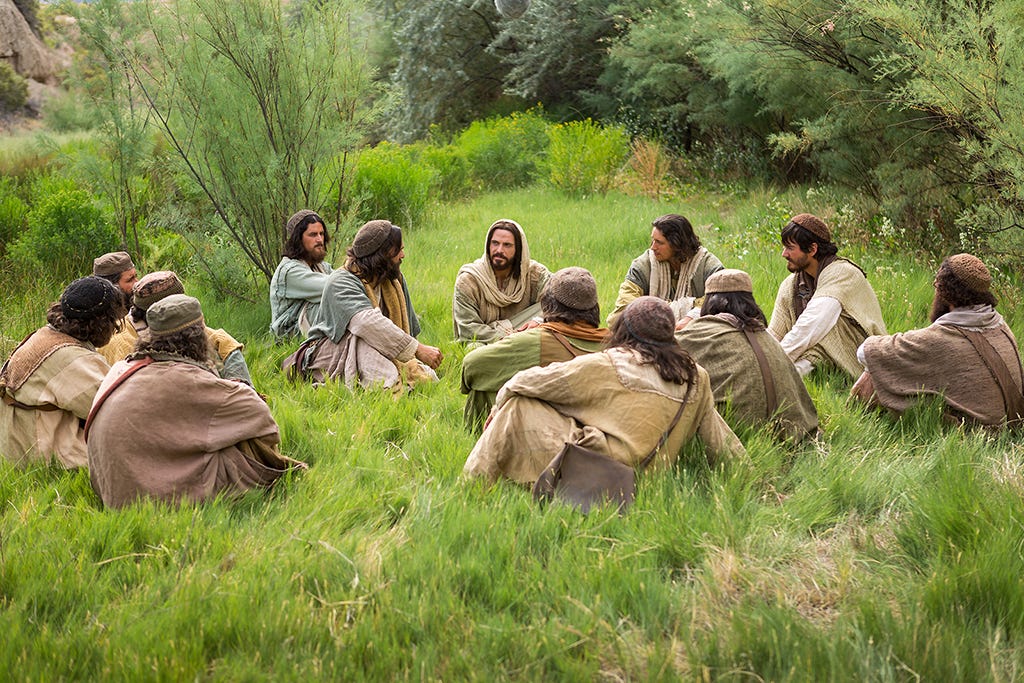
Jesus gave the Great Commission to the 12 Apostles, saying, “All authority in heaven and on earth has been given to me. Therefore, go and make disciples of all nations, baptizing them in the name of the Father, the Son, and the Holy Spirit, and teaching them to obey everything I have commanded you. And surely I am with you always, to the very end of the age” (Matthew 28:18-20 NIV). After Jesus ascended to heaven, the church began, along with Satan’s attempts to imitate God and disrupt His plan. The Apostle Paul often confronted false teachings that slipped into the early church: Corinth faced immorality, Colossae had mystics, Ephesus dealt with false teachers, Thessalonica had end-times fanatics, and Philippi had complainers (Muehlhoff, T., & Lewis, T. V., 2010). The Bible remains invaluable, as knowing His Word protects us from being deceived by false doctrines.
References:
CNS photo/Paul Haring. 2018. Retrieved from https://www.americamagazine.org/faith/2018/03/03/pope-francis-establishes-universal-feast-day-blessed-virgin-mary-mother-church
MacArthur, J. (2015). Exposing the Idolatry of Mary Worship parts 1-4. YouTube. Retrieved from https://youtu.be/RbDn_KU7BqU
McGrath, A. (2012). Historical Theology: An Introduction to the History of Christian Thought.2nd edition. Retrieved from http://www.modernreformation.org/default.php?page=articledisplay&var2=750
Muehlhoff, T., & Lewis, T. V. (2010). Authentic communication: Christian speech engaging culture. Downers Grove, IL: InterVarsity Press. Retrieved by: http://gcumedia.com/digital-resources/intervarsity-press/2010/authentic-communication_christian-speech-engaging-culture_ebook_1e.php
Theotokos Catholic Book. Words spoken by Mary at Fatima. Retrieved from http://www.theotokos.org.uk/pages/approved/words/wordfati.ht
 FAITH in JESUS CHRIST ALONE - Jesus Forum