
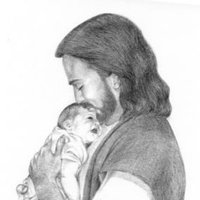
Abortion has often been seen as a political issue intended to be rare, but it has become a more common method of birth control, especially among minority groups. Since the feminist movement and the 1973 Roe v. Wade decision, some have considered abortion a serious crime. As Americans continue to be divided, more people see the issue as a moral concern rather than merely a political one. There was a time when America regarded the Bible as the standard and God as the ultimate truth, yet in the last 50 years, shifting values—particularly regarding abortion—have contributed to a decline in faith and family values. While the United States, India, and China report the highest abortion rates, about 24 countries, including Nicaragua, the Philippines, Egypt, Malta, and Haiti are pro-life.
Historical

The belief that life begins at conception isn’t new; for centuries, philosophical and theological perspectives have held this view, and in recent times science has confirmed it. Plato supported population control and eugenics, while Aristotle believed unhealthy or deformed babies should be disposed of. Jerome and Augustine couldn’t determine when a fetus transitioned from “formatus” to “informatus,” marking ensoulment. Tertullian held that body and soul began together at conception, whereas Aristotle claimed the soul entered the embryo 40 days after conception for males and 90 days for females. Tertullian viewed the seed as the potential person with the fruit already in its seed. Aquinas believed God created the soul with a mind at the moment of conception, coinciding with the embryo’s first formation. While science can’t confirm “sequential substantial changes” in fetal stages, modern philosophy aligns with natural science in recognizing that the ovum—the initial union of sperm and egg—contains the genetic code that guides the entire psycho-physical development of a human being.
God is Truth
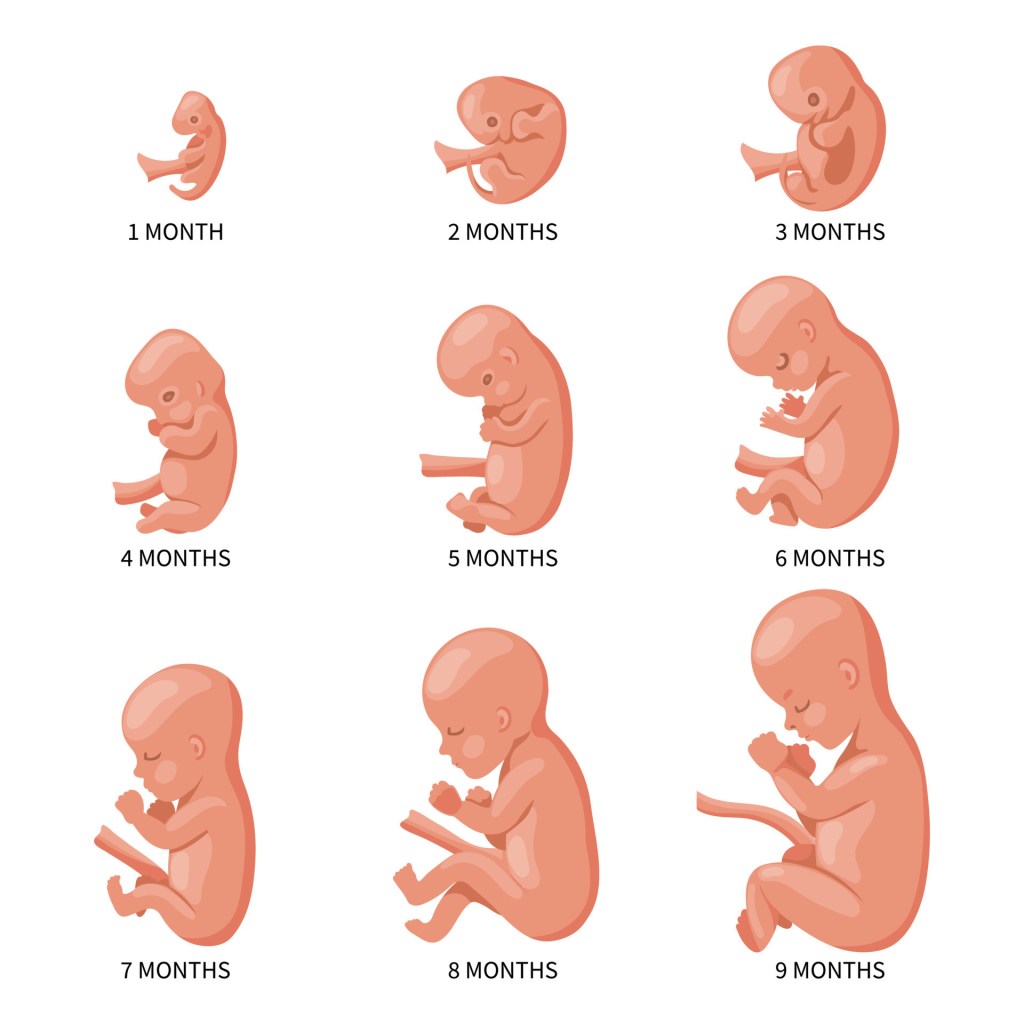
God is the ultimate scientist and the universe is a product of intelligent design rather than random chance. The cell’s complexity and its ability to regenerate shows the intentional work of a sovereign God who ordains everything, including egg fertilization, no matter the circumstances. While this can be hard to fully understand with our limited minds, there’s much we do know. God says, “Let us make mankind in our image, in our likeness…” (Genesis 1:26) and commands us to “be fruitful and multiply” (Genesis 1:28). From the very beginning with Adam and Eve, God entrusted humans with bearing His image, caring for the earth, and ruling over all living things (Genesis 2:28). The Bible’s historical and scientific accuracy make it a timeless source of truth.
God knew us before the world began, every human being is a unique and treasured gift from Him. Psalm 139 describes how God formed our innermost parts and knitted us together in our mother’s womb, making us fearfully and wonderfully made. America’s stance has often reduced early stages of a baby’s development to just a clump of cells despite evidence showing otherwise: by 17 days, the heart beats; at 6 weeks, brain waves are present; at 8 weeks, organs are forming and the baby responds to touch; by 9 weeks, fingerprints, genitals, toes, and fingers are formed; and between 12–20 weeks, the baby can feel pain, kick, grab, suck, and even cry in the womb.
Many Christians see abortion as one of the gravest sins in this fallen world, viewing it modern-day child sacrifice. For decades, America has been drifting away from God, creating a culture where truth is manipulated and right is seen as wrong. When sin is ignored, it leads to deeper moral decline, as scripture says, “…just as they did not think it worthwhile to retain the knowledge of God, so God gave them over to a depraved mind, so that they do what ought not to be done. They have become filled with every kind of wickedness…” (Romans 1:28-29).
Planned Parenthood
Planned Parenthood is known as the largest provider of abortions. After an abortion, a young woman may feel some relief; Unfortunately, her story takes a dark turn as she grapples with guilt, promiscuity, drug use, alcoholism, depression, suicidal thoughts, and the fear of being exposed, all stemming from the shame she carries. Most of Planned Parenthood’s services are reportedly abortions, along with other offerings like STD testing and birth control that are used to disguise abortions in order to obtain federal funding and be viewed in a positive light. Planned Parenthood also provides hormone therapy for gender transition, including for minors. Planned Parenthood will avoid showing women a sonogram, as seeing the baby on the monitor will more than likely make them choose having their baby. Planned Parenthood’s significant portion of its work and revenue comes from surgical abortions and abortion pills like mifepristone. Costs for procedures range from about $350–$600 for the abortion pill (5–10 weeks), $320–$600 for suction D&C (5–14 weeks), $500–$2000 for dilation and evacuation (15–24 weeks), and $4000–$15,000 for third-trimester abortions (25 weeks to birth). Many of Planned Parenthood centers are in lower-income, predominantly Black neighborhoods, a decision linked to its founder Margaret Sanger. Sanger supported eugenics, believed Black women had too many children, and aimed to reduce the Black population. She considered them inferior, had ties to the Ku Klux Klan, and spoke at a Women’s Auxiliary rally in New Jersey advocating birth control. Her eugenics ideology even influenced Adolf Hitler’s views on eradicating the Jewish people. In Conclusion, Planned Parenthood should not be viewed as a health clinic nor pro-woman because having a baby is unique to womanhood.
Abortion Statistics

The highest number of abortions is 1,032,100 in 2023. Women having abortions are not due to rape or incest which accounts for <.05%. Statistics show abortion as result of it would “dramatically change my life” at 74% (Finer, Frohwirth, Dauphinee, Singh, & Moore). In the 1970s and 1980s when fetal alcohol syndrome was recognized, alcohol, tobacco, and other drugs (ATOD) was considered a medical reason suggesting ATOD acceptable in terminating pregnancies (Roberts, Avalos, Sinkford & Foster); with 1 out of 20 women claiming ATOD as the reason (Roberts). During this time, cautions surrounding alcohol consumption and its effects on pregnancy may have resulted in many women assuming something wrong with their baby after learning they were pregnant after having consumed alcohol. Other and more recent data show “more than 1 in 8 U.S. women” living in poverty, and “76% of abortions occur[ing] among women at or below 200% of the federal poverty level” (Oberman). It is worthy to note an increase in contraception is likely responsible for the 13% decline of abortions from 2008 to 2011 (Jones & Jerman).
Per Guttmacher Institute, 2025:
Since 1980, there has been over 3.3 billion abortions
An average of 73M per year that is 200,000 per day
In America there have been over 65.4 million abortions since 1973
From 2023-2024, there were a million more abortions in America
In America:
12% abortions ages 18-25
66% abortion in their 20’s
33% abortions ages 20-24
28% abortions ages 25-29

PSALM of King David
For you created my inmost being, you knit me together in mother’s womb. I praise you because I am fearfully and wonderfully made; your works are wonderful; I know that full well. My frame was not hidden from you when was made in the secret place when I was woven together in the depths of the earth. Your eyes saw my unformed body; all the days ordained for me were written in your book before one of them came to be. (Psalm 139:13-16)
God is Love, Love is Freedom, God is Freedom
God is freedom, giving humans the will to choose, including whether to love or reject Him. Instead of turning to Planned Parenthood, women can seek help from churches and other outreach organizations. Many ministries support women before, during, and up to 3 years after they have their baby, such as SIDEWALKS4LIFE.COM, ABORT73.COM, ABORTIONDOC.ORG, LIVINGWATERS.COM, ABORTIONPROCEDURES.COM, TINYHANDSBOOK.COM, ABORTIONNO.ORG, HH76.ORG, and ABORTIONWORKER.COM. There’s a misconception that pro-life organizations try to force a woman to have a baby or judge and shame her. These groups don’t convince or coerce; they offer education about the life growing within her and the God who has blessed and loves her. Whatever her choice, a pro-life ministry will stand by her.
References
Czachorowski, M., (2018). Abortion in The Universal Encyclopedia of Philosophy, volume 7.Studia Gilsoniana 7, no. 4: pages 567-578. Retrieved From http://cejsh.icm.edu.pl/cejsh/element/bwmeta1.element.desklight-d3998022-9494-40a6-bb41-9232cc491178.
Finer LB, Frohwirth LF, Dauphinee LA, Singh S, & Moore AM. (2005). Reasons U.S. women have abortions: quantitative and qualitative perspectives. Perspectives on Sexual & Reproductive Health, 37(3), 110–118. Retrieved from https://search-ebscohost-com.lopes.idm.oclc.org/login.aspx?direct=true&db=ccm&AN=106545873&site=eds-live&scope=site.
Jones, R. K., & Jerman, J., (2017). Abortion Incidence and Service Availability In the United States, 2014. Perspectives on Sexual & Reproductive Health, 49(1), 17–27. https://doi-org.lopes.idm.oclc.org/10.1363/psrh.12015.
McQuilkin, R., & Copan, P. (2014). An introduction to biblical ethics: Walking in the way of wisdom (3rd ed.). Downers Grove, IL: InterVarsity Press. ISBN-13: 9780830828180.
Oberman, M. (2018). Motherhood, Abortion and the Medicalization of Poverty. The Journal of Law, Medicine, and Ethics 46: 665-671. doi: 10.1177/1073110518804221.
Guttmacher Institute, https://www.guttmacher.org/united-states/ abortion, 2025




 FAITH in JESUS CHRIST ALONE - Jesus Forum