
Beginning of the Apostolic Church:

Humans have a natural need to worship, and the responsibility placed on church leaders to guide and care for their flock is immense. Believers are often reminded to check everything against scripture. Satan, who disguises himself as “an angel of light” (2 Corinthians 11:14), works to confuse, distort, divide, and keep people from Christ. He is the master of imitation, manipulate scripture just enough to deceive. He deceived Eve into questioning God and tried to tempt Jesus in the wilderness by misusing scripture. The best defense against such deception is knowing scripture well, enabling believers to spot false doctrine and false teachers.
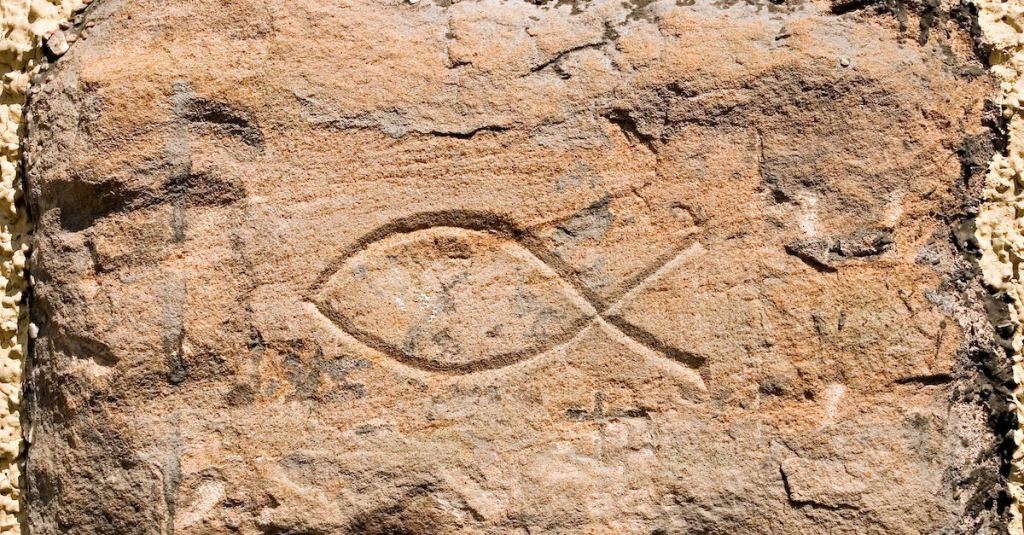
The Word of God is made up of the Old and New Testaments. Each of the four Gospels offers a unique perspective, with varying details, yet the story of Jesus remains consistent. They share who He is, what He accomplished, and what it means for humanity. The Bible speaks of God’s chosen people, Israel; Jesus as the Messiah, His death and resurrection, His victory over death, the arrival of the Holy Spirit, salvation, and the start of the Church Age.
Church Age Begins

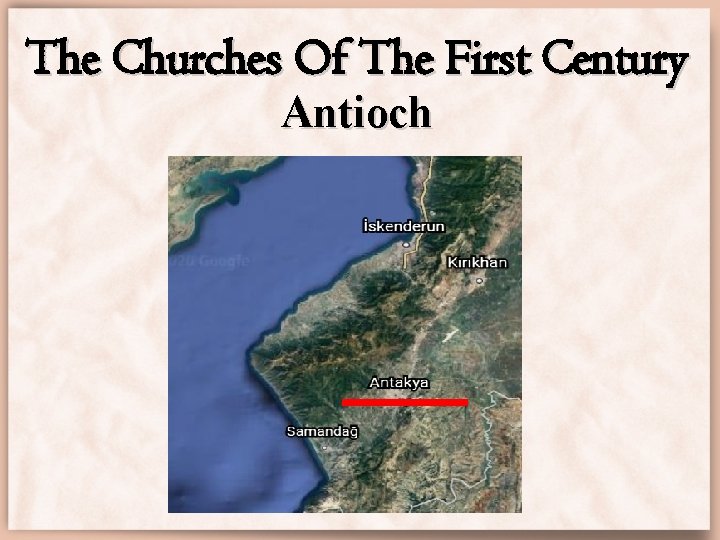
In first-century Judea, the population was a mix of traditional Jewish communities, Hellenistic Jews, Samaritans from the Assyrian captivity of 722 BC, and both Jewish and Hellenistic Christians living beyond Jerusalem. The Roman Empire still ruled the region, Greek was widely spoken, and safe roads made travel easy. It was the perfect backdrop for the coming of the Messiah and the start of the Church Age. After the Gospels (Matthew, Mark, Luke, and John), the Book of Acts begins with Pentecost, when the apostles received the Holy Spirit and set out to spread the Gospel, proclaim that “God the Father sent His only begotten Son into the world that whoever believes in Him shall not perish but have everlasting life” (John 3:16). But soon, disagreements and conflicts arose from the societal, political, and cultural challenges facing the early Church. The chief priests and Pharisees thought killing Jesus would silence talk of Him, yet they kept stirring trouble, even provoking a riot that led to Stephen’s stoning. This drove Hellenistic Christians to flee, spreading the Gospel to Phoenicia, Syria, and Cyprus (Acts 11:19), fulfilling “…all except the apostles were scattered throughout Judea and Samaria” (Acts 8:1). By then, two main churches had formed: one in Jerusalem, made up of Jews and led by Peter and James (Jesus’ brother), and another in Antioch, Syria, led by Paul and Barnabas. As the church expanded and needed structure, Jerusalem’s leaders appointed others to handle daily tasks so the apostles could focus on “…prayer and the ministry” (Acts 6:4). Later, Paul visited Jerusalem to report to Peter and James on the success of gentile conversions in Antioch. James noted that the Jewish Christians “…have believed, and all of them are zealous for the law”, sparking tension among the leaders as they wrestled with letting go of their Jewish traditions.
The Gospel message never changes, how it is presented will vary.
Kevin Vanhoozer
Biblical Context and Our Measuring Stick
The term “Canon”—from the Greek for “ruler” or “measuring stick”—refers to the authoritative books of the Old and New Testaments. When new teachings diverge from biblical doctrine, respected pastors, theologians, and believers are tasked with defending orthodoxy. Prior to arriving in Athens, Paul and Silas had preached in Thessalonica’s synagogue, converting many Jews and Greeks, though some opposed them violently. In Berea, they found an audience that eagerly investigated Paul’s message against Scripture (Acts 17:11).

Understanding biblical texts means paying attention to their historical and social settings to keep them relevant. How Scripture is interpreted and applied can vary across cultures, as seen in Acts when Paul spoke to Greek philosophers in Athens (Acts 17) compared to his sermon in Antioch, Syria (Acts 13). In Athens—a city full of idol worship—Paul adapted his message to connect with his audience, starting by recognizing their religiosity, “…in every way you are very religious,” Acts 17:22 and highlighting the “unknown god” from an inscription (Acts 17:23). This approach let him share a monotheistic message in a polytheistic world (Marculet).
Vanhoozer describes this as improvisation: not creating something new, but imaginatively and faithfully applying canonical truths to fresh cultural situations while remaining true to orthodox beliefs. Paul’s speech at the Areopagus exemplifies Marculet’s idea of inculturation, where the Gospel is adapted to fit the existing culture, “the Gospel has to be incarnated into a preexistent soil.”
Recently, evangelical Christians have distanced themselves from prosperity gospel and charismatic movements that focus on material success. This shift highlights the importance of systematic scriptural analysis known as Exegesis, which leads to accurate interpretation known as Hermeneutics. Critics argue charismatics sometimes quote passages such as John 14:12 out of context, suggesting believers will perform greater works than Jesus. The prosperity gospel’s promise of immediate blessings contradicts the teachings of Jesus and the early church, which emphasized spiritual growth through suffering as in Acts 14:22, “We must go through many hardships to enter the kingdom of God,” NIV. Paul, considered one of Christianity’s greatest figures, recognized this truth and regularly cautioned churches about false teachers entering their communities.

“Consider it pure joy, my brothers and sisters, whenever you face trials of many kinds, because you know that the testing of your faith produces perseverance. Let perseverance finish its work so that you may be mature and complete, not lacking anything” (James 1:2)
“For my name’s sake I defer my anger for the sake of my praise I restrain it for you, that I may not cut you off. Behold, I have refined you, but not as silver I have tried you in the furnace of affliction. For my own sake, for my own sake, I do it, for how should my name be profaned? My glory I will not give to another” (Isaiah 48:9-11)
“…so that the tested genuineness of your faith—more precious than gold that perishes though it is tested by fire—may be found to result in praise and glory and honor at the revelation of Jesus Christ” (1 Peter 1:7)
References
Marculet, S. (2013). Elements of Inculturation in Saint Paul’s speech from Areopagus. Revista Teologica, 23(3), 28–48. Retrieved from: https://search-ebscohost-com.lopes.idm.oclc.org/login.aspx?direct=true&db=a9h&AN=94518061&site=eds-live&scope=site
 FAITH in JESUS CHRIST ALONE - Jesus Forum
This was lovely too read
LikeLike
Thank you. God is good, blessings🙏🏽
LikeLike
Thank you, I revised it 2026
LikeLike